
Insights
5 Non‑Negotiables When Evaluating an Orthopedic Manufacturing Partner
When an orthopedic device company evaluates contract manufacturing partners, the stakes are high. These partners aren’t simply “vendors”. They must act as strategic enablers for precision, compliance, and long-term growth. Below are five non-negotiable criteria that orthopedic device companies should use as a filter when qualifying orthopedic surgical‑instrument manufacturers.
1. True Engineering Depth & DFM Partnership
Orthopedic surgical cutting tools (drills, reamers, rasps, guides, etc.) demand tight tolerances, sharp edges, repeatability, and careful material processing. The difference between “it just meets spec” and “it performs reliably in the OR over thousands of cycles” often comes down to smart process design, tool path optimization, fixturing, residual stress control, and feedback from manufacturing engineers.
An ideal partner brings more than a “build‑to-print” mindset. They should be willing and able to push back on design details (e.g. tolerancing, feature complexity, material choices) and suggest alternatives to reduce cost or improve robustness.
2. Robust Quality & Regulatory Systems
Orthopedic instrument manufacturers operate in a highly regulated domain and must ensure their suppliers adhere to ISO 13485 (quality for medical devices) and, where applicable, can support compliance with FDA’s 21 CFR Part 820.
But it doesn’t stop at certification: the partner’s quality system must demonstrate real maturity: documented CAPA history, changes under control, supplier management, incoming inspection, traceability, nonconformance response, audited supply chain, and more.
3. Precision Manufacturing & Capability Fit
Not every shop is built to handle orthopedic-grade instrument work. The required capabilities include:
- Multi-axis CNC milling, turning, Swiss/CNC micro machining
- Gun-drilling, Wire EDM, laser cutting, micro-EDM
- Micromachining (fine features, small tools)
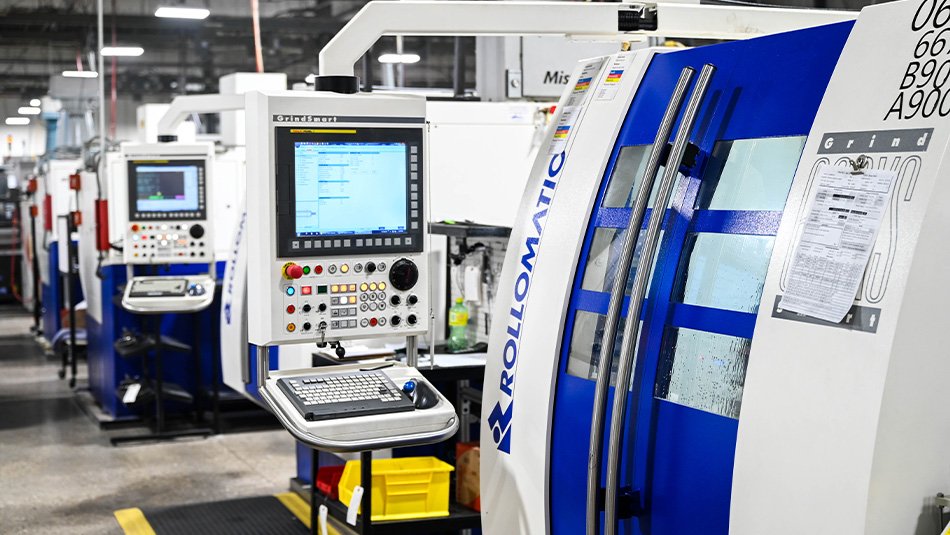
- Precision grinding, honing, polishing, lapping
- Surface finishing (passivation, electropolishing, coating, plating)
- Cleanroom capability or controlled environment for instrument production
- Assembly, subassembly, welding (laser or micro techniques), brazing or joining technologies
- In-process inspection (SPC, vision systems, coordinate measuring machines, non-contact measurement)
- Sterilization support (or interface) and method validation (steam, EO, gamma, etc.)
4. Responsiveness, Communication & Supply Agility
In orthopedic device markets, demand can swing, regulatory changes may drive redesigns, and emergencies happen (e.g. surgeon feedback, field corrections). If your partner is sluggish, opaque, or rigid, you’re exposed to supply delays or quality surprises.
A high-performing partner should have:
- Assigned technical and program management liaison for your account
- Real-time production visibility and reporting
- Forecast alignment processes, buffer capacity for spikes
- Kanban or similar small-lot supply models
- Clear escalation paths, regular status reviews, and open communication
- Ability to adapt to design changes or urgent revisions without derailing all downstream tasks
5. Strategic Alignment & Scalability for Growth
Your relationship with instrumental manufacturing partners is not transactional—it’s long-term. You want someone who can scale as your product lines evolve, absorb complexity, invest in new capacity, and commit capital to stay ahead.
- Capacity headroom: Can the partner expand throughput, staffing, or shifts if demand grows?
- Forward investment roadmap: Do they have plans for new equipment, automation, process upgrades, or R&D?
- Innovation mindset: Are they willing to explore advanced materials, additive manufacturing, AI/ML process control, automation, or smart inspection?
- Financial stability: A manufacturer must be stable enough to weather slow cycles without compromising supply or quality.
- Geographic/Regulatory fit: If your markets include U.S., EU, Asia, etc., your partner must be comfortable supporting multiple regulatory zones, supply logistics, and possibly local content requirements.
If you find a partner that checks all earlier technical boxes but lacks long-term alignment, you’re still at risk of needing to re-qualify a new partner mid-life-cycle of your product.
Conclusion
Your manufacturing partner for orthopedic cutting tools and instruments must transcend the role of an order‑fulfillment shop. You need an engineering collaborator, a quality guardian, a supply chain anchor, and a strategic growth ally.
As you evaluate prospects, rate them not just on today’s quotes but on their behavior under pressure, their roadmap, and how early they include you in engineering decisions.
If you’re exploring partners who can deliver on these five non‑negotiables, Marmon Medical Manufacturing is one name worth vetting. We specialize in orthopedic cutting tools and surgical instruments, and our approach begins with engineering collaboration, strong quality systems, and a roadmap for growth. Interested in custom capability briefing? Contact us today!